 Copse & Compass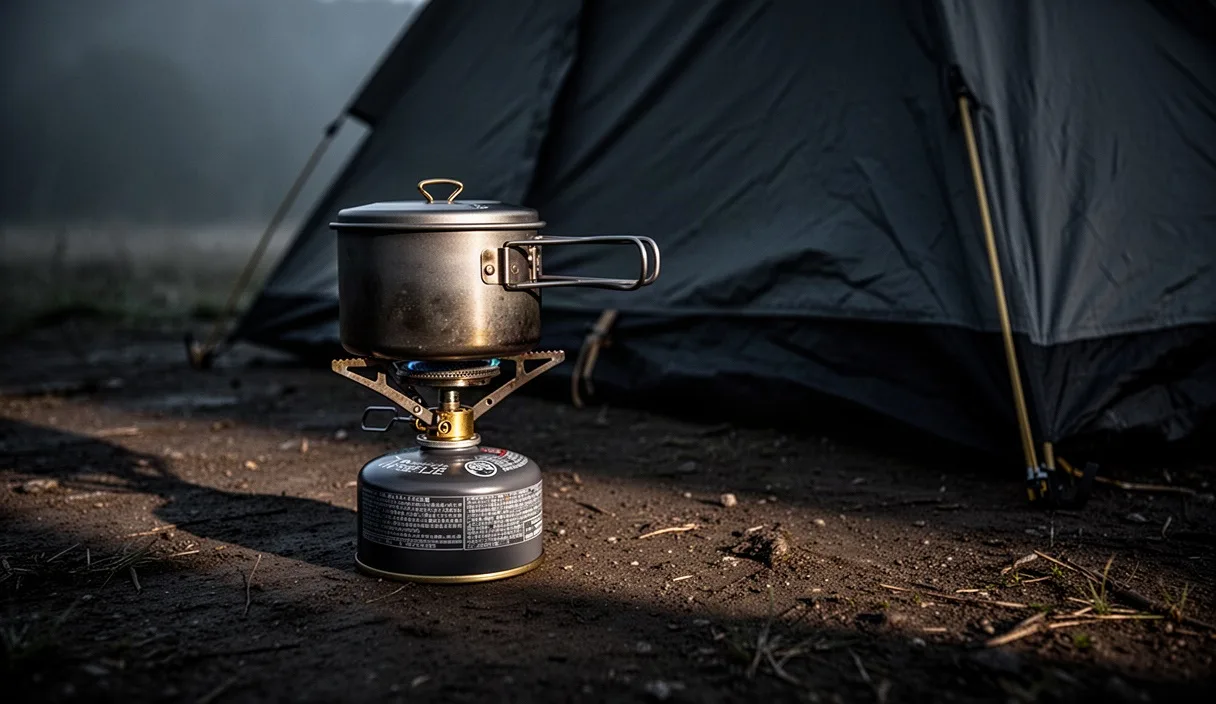
Ask ten backpackers what stove they carry and you'll probably get three different answers, and all three of them will defend their choice like it's a family recipe. That's because there isn't one right stove, there's a right stove for what you're doing, where you're doing it, and what time of year it is. Canister stoves, liquid fuel stoves, and wood burners each solve a different problem, and each one creates a different problem of its own.
We've used all three types on trips ranging from three-day weekend loops to multi-week traverses, and we've learned most of what follows the hard way, usually at a trailhead at 6 a.m. when something wouldn't light. This guide breaks down how each stove actually works, where it shines, where it struggles, and how to pick one based on your trip rather than on whatever your hiking partner swears by.
How each stove type actually burns fuel
Canister stoves burn pressurized gas, usually a mix of isobutane and propane, stored in a sealed metal canister. The gas is already in vapor form under pressure, so when you open the valve it flows straight to the burner and ignites with a lighter or built-in piezo igniter. There's no priming, no pumping, no liquid fuel to manage. The tradeoff is that the pressure inside the canister depends on temperature, and that single fact drives almost every limitation this stove type has.
Liquid fuel stoves burn white gas (or sometimes kerosene or unleaded gasoline, depending on the model) that starts as a liquid in a refillable bottle. You pressurize the bottle with a small hand pump, then open a valve to send fuel through a line to the burner, where it passes through a generator tube that vaporizes it before combustion. Most liquid fuel stoves need priming, which means burning a small amount of fuel in a cup below the burner to heat the generator tube before the main flow kicks in. It's a few extra steps, but the payoff is a flame that doesn't care much about outside temperature.
Wood-burning stoves skip fuel storage entirely and burn twigs, bark, pine cones, or whatever dry biomass you find on the ground. Most are small metal chambers with air vents that create a chimney effect, drawing air up through the burning wood to keep combustion hot and efficient. Some newer designs add a battery-powered fan to force air through the fire, which burns hotter and produces less smoke than a simple open-vent design.
Canister stoves: convenience and cold-weather limits
A canister stove is about as close to "twist and light" as backpacking cooking gets. Screw the burner onto the canister, open the valve, hit the igniter, and you've got a flame in under five seconds. There's no pumping, no priming, no soot on your hands. A typical setup like a MSR PocketRocket 2 or a Soto WindMaster weighs around 2 to 3 ounces for the burner alone, and a 8-ounce fuel canister will boil roughly 4 to 5 liters of water depending on wind and altitude.
The catch is pressure. Isobutane canisters lose pressure as temperature drops, and below about 20°F (-6°C) many canisters struggle to maintain a steady flame, especially as the canister empties and internal pressure drops further. Some hikers manage this by sleeping with the canister in their sleeping bag overnight or keeping it in an inner jacket pocket while cooking, which warms the gas enough to keep pressure up. Stoves with an inverted canister option, where you flip the canister upside down and run liquid fuel through a preheat tube, handle cold far better, but they cost more and add complexity.
Altitude is less of a problem than cold. Canister stoves perform fine above 10,000 feet as long as temperatures stay reasonable, since the pressurized gas doesn't depend on atmospheric oxygen the way a wood fire does. The real limitation is simply: cold canister, weak flame, and a flame that gets weaker as the canister empties over the trip.
Liquid fuel stoves: reliability in tougher conditions
Liquid fuel stoves like the MSR WhisperLite or the Optimus Nova trade convenience for dependability. Because the fuel bottle is pressurized manually with a pump rather than relying on ambient temperature, these stoves keep burning strong in conditions that would choke a canister, including sub-zero mountaineering trips and high-altitude winter camps. Guides on extended expeditions in places like the Alaska Range or the Himalaya almost always carry liquid fuel stoves for this reason.
The setup takes longer and demands more attention. A typical priming and lighting sequence looks like this:
- Pump the fuel bottle 15 to 20 strokes to build pressure.
- Open the valve briefly to release a small amount of fuel into the priming cup below the burner.
- Close the valve and light the fuel in the cup, letting it burn down completely.
- Once the generator tube is hot, open the valve again to start the main burner flame.
- Adjust the flame with the control valve once it's burning steadily.
That priming flame produces a noticeable flare and some soot, which is normal but takes new users by surprise the first time. On the plus side, refillable fuel bottles mean you're not carrying dead weight; a 20-ounce bottle of white gas can last a week of cooking for two people, and you can see exactly how much fuel remains by looking at the liquid level, something canisters never let you do reliably.
Wood-burning stoves: less to carry, more to manage
The appeal of a wood stove is obvious: no fuel to buy, pack, or run out of, as long as there's dry wood around. A stove like the Solo Stove Lite or a BioLite CampStove weighs 8 to 12 ounces and packs down small, and some models like the BioLite even charge a phone off the heat generated by the fire through a built-in thermoelectric generator.
The management side is real, though. You need dry tinder and small sticks, which isn't guaranteed after rain or in wet regions like the Pacific Northwest, where finding bone-dry kindling can take real effort even under a tree canopy. Feeding the fire while cooking means you're tending it constantly rather than setting a pot and walking away, and boil times run longer and less predictable than gas stoves since flame intensity varies with what you're burning. Many wilderness areas also restrict or ban wood fires entirely during dry seasons due to wildfire risk, which can make a wood stove useless exactly when you need it most.
Smoke is the other factor people underestimate. Cooking pots blacken with soot, tents and gear can pick up a campfire smell that lingers for days, and cooking in enclosed spaces like a vestibule during rain is not something you want to do with an open wood flame.
Fuel availability on the trail
Isobutane canisters are sold at nearly every outdoor retailer in North America and Europe, including REI, Decathlon, and most gear shops near trailheads, so resupply on long trips like the Appalachian Trail or the Pacific Crest Trail is usually straightforward in trail towns. International travel is trickier: canisters can't be carried on airplanes, so hikers flying to a destination like Nepal or Patagonia need to buy them locally, and availability of the right thread size and gas blend varies by country.
White gas is sold at most hardware and outdoor stores in the U.S. and Canada but is harder to find in parts of Europe, Asia, and South America. This is exactly why liquid fuel stoves that can burn kerosene or even unleaded gasoline exist, since kerosene is sold almost everywhere globally, including small villages where white gas has never been stocked. If you're planning an international trek, check what fuel type is locally common before choosing your stove.
Wood is free but not guaranteed. Above treeline, in deserts, in heavy snow, or during fire bans, there may be no usable fuel at all, which is the single biggest argument against relying on a wood stove as your only cooking method on an unfamiliar route.
Boil times and simmer control compared
Boil time depends on wind, altitude, starting water temperature, and pot size, but rough averages for boiling 1 liter of water in calm conditions at sea level look like this:
| Stove type | Approx. boil time (1L) | Simmer control |
|---|---|---|
| Canister | 3 to 4 minutes | Good, easy to dial down |
| Liquid fuel | 3.5 to 5 minutes | Moderate, some models simmer poorly |
| Wood-burning | 6 to 10 minutes, variable | Difficult, flame size hard to control precisely |
Canister stoves generally win on fine simmer control because the valve gives a direct, immediate adjustment to gas flow. This matters if your cooking involves anything beyond boiling water, like simmering rice or a sauce that scorches easily. Liquid fuel stoves can simmer reasonably well once the generator tube is fully warmed up, but some older models run almost full blast or nothing. Wood stoves are the hardest to control since you're managing combustion by adding or removing fuel rather than turning a dial, which makes anything beyond boiling water a genuine skill to practice at home before you need it on trail.
Matching the stove to your trip length and season
For a weekend trip in mild weather, a canister stove is hard to beat. It's light, fast, and simple, and you're not carrying enough fuel for pressure or weight to become an issue. For a week-long summer trip, canister still works well, though you'll want to bring a spare canister or calculate fuel needs carefully, since running out mid-trip with no resupply option is a real risk on remote routes.
For winter trips, high-altitude mountaineering, or anywhere temperatures regularly drop below freezing, a liquid fuel stove is the more dependable choice, despite the extra weight of the pump and bottle. For international travel where canister availability is uncertain, a multi-fuel liquid stove that burns kerosene or gasoline gives you flexibility that canister stoves simply can't match.
Wood stoves make the most sense for shorter trips in forested regions with reliable dry fuel and no fire restrictions, where the appeal of never running out of "fuel" is real. We'd avoid relying on one as a sole cooking method for a long thru-hike or anywhere fire bans are common, since a single restricted zone can leave you with no way to cook at all.
Common mistakes
- Bringing only one canister on a cold-weather trip without testing how it performs near freezing beforehand.
- Skipping the priming step on a liquid fuel stove and wondering why the flame sputters or flares unexpectedly.
- Assuming wood will always be available and not carrying a backup fuel source for wet or restricted areas.
- Not checking canister valve thread compatibility before an international trip, since some countries use different standards.
- Overfilling a liquid fuel bottle past the recommended fill line, which leaves no room for pressurized air and makes pumping ineffective.
Next steps
If you're not sure which type suits your usual trips, start by listing your typical season, elevation, and whether you travel internationally, since those three factors narrow the choice fast. Borrow or rent a stove before buying if you can, most gear shops and some REI locations offer rentals, and there's no substitute for boiling water on your own stove in your own backyard before trusting it on trail. Whatever you choose, practice lighting and simmering at home first, ideally in cool or breezy conditions similar to what you'll face outdoors, so the first time you use it isn't also the first time you're troubleshooting it.