 Copse & Compass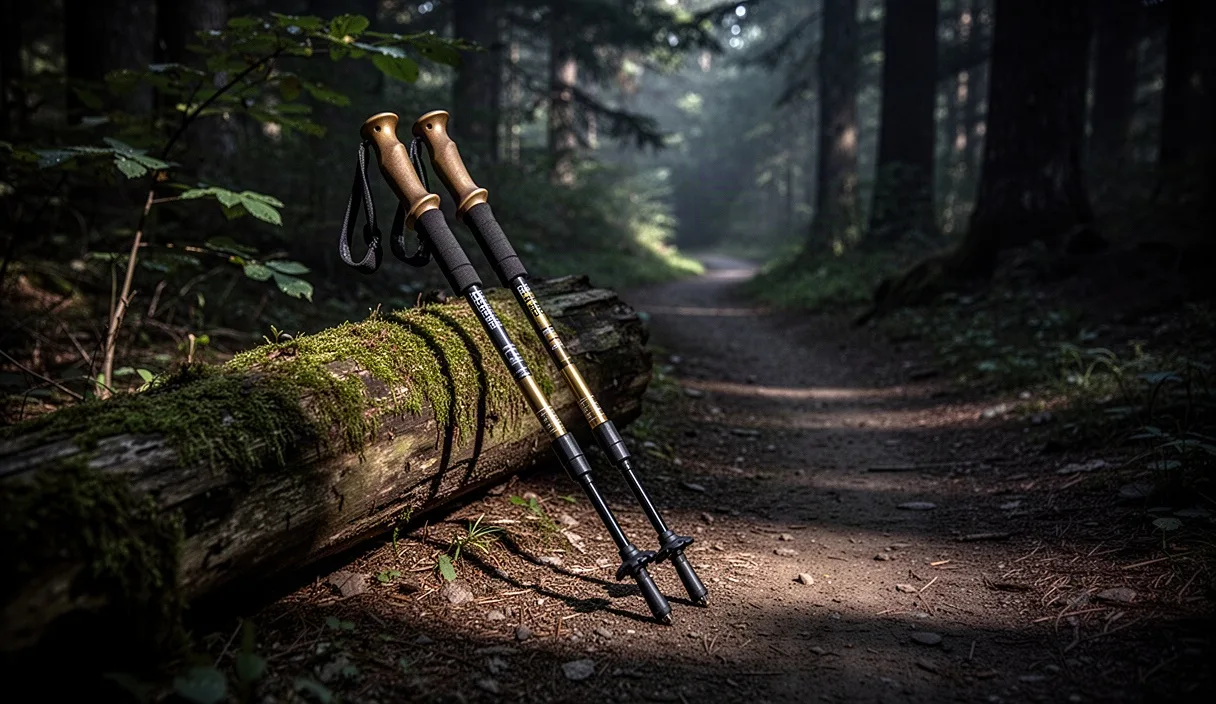

We get this question a lot at the shop, usually from someone standing in front of our poles display, turning one over in their hands, and asking if they really need it. The honest answer is: it depends on your knees, your pack, and the trail you're heading out on. There's no universal rule that fits every hiker, and anyone who tells you poles are always necessary or always a gimmick hasn't hiked enough varied terrain to know better.
This guide walks through what poles actually change in your body mechanics, when they earn their weight, and when they're just extra gear clanking against your pack. We'll also cover the practical stuff, adjustable versus fixed poles, and give you our honest take for the average weekend hiker who isn't training for anything, just wants a good day outside.
What trekking poles actually do for your body
Trekking poles redistribute load from your legs to your arms and shoulders. Studies on treadmill walking with poles, including one published in the Journal of Sports Sciences, found that pole use can reduce the compressive force on the knees by a noticeable margin during downhill walking, largely because some of your body weight is transferred through the poles into the ground instead of absorbed entirely by your knee joints.
Poles also improve your base of support. Instead of two contact points, you have four, which matters on uneven ground, loose gravel, or when you're crossing a stream on wet rocks. That extra stability reduces the number of small stumbles and corrective steps your ankles and knees have to make, which adds up over a ten-mile day.
There's a cardiovascular angle too. Because your arms are doing more work, your heart rate tends to run a bit higher for the same walking pace compared to walking without poles. Some hikers like this because it means a better workout. Others find it tiring on long days when they'd rather conserve energy for the miles ahead.
None of this is medical advice, and if you have an existing knee condition, a physical therapist or your doctor is a better source for what's right for your specific joints than any gear article, including this one.
Flat trail walking: is the extra gear worth it
On flat, well-maintained trail, poles do less work for you. There's no descent to brace against, no scrambling over roots, so the main benefit becomes rhythm and light stability. Some hikers like the walking rhythm poles create, similar to how a metronome helps some runners find a pace.
We've watched customers try poles for the first time on the flat riverside loop near our shop, about four miles round trip with almost no elevation change. Most report that poles feel unnecessary there, sometimes even slightly annoying because they have to be swung and planted with every step, which is one more thing to think about when you're just trying to enjoy the walk.
Where flat trail poles do help: if you're carrying a heavier pack, dealing with a old ankle injury, or walking with a dog on a long leash and want the extra stability if you get pulled off balance. They also help on flat trail that's muddy or slick, since two extra points of contact reduce your chance of a slip.
Our take: for flat, dry trail with a light day pack, most hikers don't need poles. Save them, or leave them at home, and give your arms a rest.
Steep descents and how poles protect your knees
This is where poles earn their keep. On a steep, sustained descent, your quadriceps and knees absorb a huge amount of eccentric load with every step, essentially braking your body weight over and over for however long the descent lasts. A mile-long descent with a thousand feet of elevation loss can leave your knees feeling it the next day, especially if you're carrying any extra weight.
Poles let you plant ahead of your feet and use your arms to control some of that braking force. The mechanics are simple: instead of your knee absorbing one hundred percent of the deceleration, some of it transfers through your arm, shoulder, and the pole itself into the ground. Over a long descent, that shared load can mean the difference between knees that feel fine at the trailhead and knees that are stiff and sore.
Practical example: on a steep switchback trail like sections of the Appalachian Trail near Mount Washington, hikers with poles often report noticeably less knee soreness the next day compared to previous trips without poles, especially past age forty or on descents longer than two miles.
If you already have a diagnosed knee issue, meniscus wear, early joint mobility, or a previous ACL injury, poles on descents are one of the more evidence-backed pieces of gear advice we give, though again, talk to a physical therapist about your specific situation rather than taking a blanket recommendation from a hiking article.
Carrying a loaded pack versus a day pack
Pack weight changes the poles calculation more than almost any other factor. A day pack in the range of eight to twelve pounds doesn't put much extra strain on your knees, so poles are optional even on moderate terrain. A backpacking pack loaded to thirty, forty, or fifty pounds is a different story entirely.
Every pound on your back multiplies the force through your knees on descents. Add poles into that equation and you're distributing a meaningful portion of that multiplied force through your arms instead. We've talked to thru-hikers on the Pacific Crest Trail who started their hike without poles and switched to them within the first two hundred miles specifically because of knee pain from the loaded pack, not the trail itself.
Here's a rough comparison based on what we see hikers report and what pole manufacturers like Black Diamond and Leki cite in their own material:
| Pack weight | Flat trail | Steep descent |
|---|---|---|
| Under 15 lbs | Poles optional | Poles helpful but not essential |
| 15 to 30 lbs | Poles helpful for stability | Poles recommended |
| Over 30 lbs | Poles recommended | Poles strongly recommended |
If you're backpacking multiple days with a loaded pack, we'd steer you toward poles most of the time, simply because the cumulative strain on tired legs late in the day is where knee injuries and rolled ankles tend to happen.
When poles get in the way instead of helping
Poles aren't free. They take up your hands, which matters more than people expect until they're trying to scramble over a boulder, take a photo, or eat a granola bar while walking. On trail with a lot of scrambling, like rocky sections of the White Mountains in New Hampshire, poles often end up strapped to the pack because hikers need both hands free for the rock.
Dense brush or narrow trail is another spot where poles become a liability rather than a help. Tight switchbacks through thick rhododendron tunnels, common in parts of the Southern Appalachians, can catch pole tips and slow you down more than they help your balance.
Poles also add a small but real cognitive load. Every step now involves coordinating four limbs instead of two, and for brand-new hikers, that can actually increase clumsiness for the first few outings before it becomes automatic. We usually tell first-time buyers to practice on an easy trail near home before bringing poles on something technical.
Weight is a factor too. A pair of poles typically runs one pound to one and a half pounds combined. That's not heavy, but on an ultralight setup where every ounce is counted, some hikers decide the knee benefit isn't worth the pack weight, especially on trips without major elevation change.
Adjustable versus fixed-length poles
Adjustable poles, usually telescoping with a flick-lock or twist-lock mechanism, let you change length for uphill versus downhill sections. The general guideline is to shorten poles by about five to ten centimeters for steep climbs and lengthen them by the same amount for steep descents, which keeps your elbow at roughly a ninety-degree angle for climbing and lets you reach further downhill without hunching.
Fixed-length poles, often found in ultralight or budget setups, skip the adjustment mechanism entirely, which saves weight and removes one more thing that can fail on trail. Flick-locks can loosen over time or get gritty with dirt, and we've replaced more than a few broken lock mechanisms for customers over the years, usually after a hard fall or years of use.
For hikers who stick to one type of terrain, say mostly flat trail or mostly one specific mountain they hike every weekend, fixed-length poles set at a comfortable middle length work fine. For hikers who do varied elevation trips, big climbs one weekend, flat rail trail the next, adjustable poles are worth the extra weight and cost.
Price is a real factor too. A solid pair of adjustable poles from a brand like Black Diamond or Leki runs somewhere between sixty and one hundred and fifty dollars, while fixed-length carbon poles from smaller ultralight brands can run less, sometimes under fifty dollars for a decent pair.
Common mistakes
- Using poles at the wrong length. Poles set too long force your shoulders up and make climbing awkward. Too short, and you'll hunch on descents.
- Planting poles too far ahead. This reduces the stability benefit and can actually throw off your rhythm rather than help it.
- Skipping the wrist straps. The straps let you rely on your wrist rather than gripping the handle tightly the whole hike, which saves your hands from cramping on long days.
- Buying poles right before a big trip with no practice. New coordination takes a hike or two to feel natural. Test poles on a local trail before a major backpacking trip.
Our honest recommendation for most weekend hikers
If you're doing mostly flat to moderately rolling trail with a light day pack, save your money and your closet space. Poles won't hurt, but they're not solving a problem you have.
If your weekend hikes regularly include steep descents, especially anything over a thousand feet of elevation loss, or if you're carrying a pack heavier than fifteen pounds, we'd genuinely recommend trying a pair of adjustable poles. Borrow a friend's pair first if you can, or ask us at the shop, we usually have demo pairs you can walk around the parking lot with before buying.
Start with a mid-range adjustable pair, test them on a familiar trail with some elevation change, and pay attention to how your knees feel the next morning compared to a similar hike without poles. That comparison, done honestly over a few outings, will tell you more about whether poles suit your body than any article, including this one, ever could.